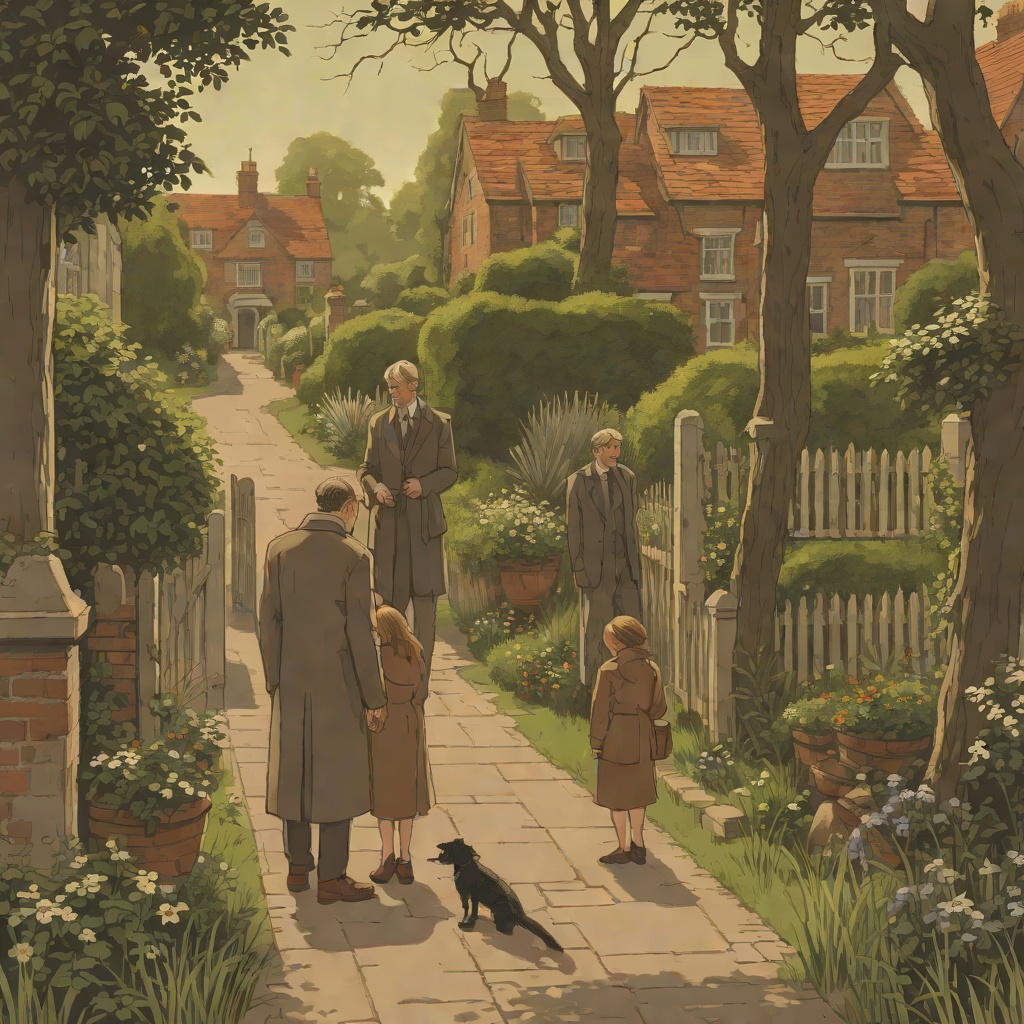
Rex and Elizabeth
The Unlikely Pilgrimage of Harold FryRex and Elizabeth are the Frys' next-door neighbours on Fossebridge Road, a street built on a hill above Kingsbridge with far-reaching views over the town and countryside. Rex is a short man with tidy feet at the bottom, a small head at the top, and a very round body in the middle, so that Harold sometimes fears that if Rex fell he would roll down the hill like a barrel. Elizabeth, as glimpsed in the framed photographs on Rex's mantelpiece, was a tall woman with a bovine jaw, a gravelly laugh, and the distracted look of a guest at a cocktail party. Maureen, who never said this to anyone except David, always felt a little overpowered by Elizabeth and was not even sure she liked her. Rex had been widowed six months before the novel's present, at about the time of Harold's retirement, and since Elizabeth's death he liked to talk about how hard life was, at great length.
Identity and Background
Rex and Elizabeth are the Frys' next-door neighbours on Fossebridge Road, a street built on a hill above Kingsbridge with far-reaching views over the town and countryside. Rex is a short man with tidy feet at the bottom, a small head at the top, and a very round body in the middle, so that Harold sometimes fears that if Rex fell he would roll down the hill like a barrel. Elizabeth, as glimpsed in the framed photographs on Rex's mantelpiece, was a tall woman with a bovine jaw, a gravelly laugh, and the distracted look of a guest at a cocktail party. Maureen, who never said this to anyone except David, always felt a little overpowered by Elizabeth and was not even sure she liked her. Rex had been widowed six months before the novel's present, at about the time of Harold's retirement, and since Elizabeth's death he liked to talk about how hard life was, at great length.
Rex's Grief and the Confession
Rex's grief is expressed through his compulsive talk about how hard life is, a habit that Maureen tolerates with the remark that 'the least you can do is listen,' though Harold is unsure whether she means 'you' in the general sense or the particular. When Harold leaves on his pilgrimage, Rex becomes a confidant for Maureen, who tells him about Queenie's letter, Harold's sudden decision to leave, and her shameful visit to the locum, confessing at last, 'I'm frightened he won't come back.' In a moment of quiet intensity, Rex reveals the depth of his own regret: when the doctors told them Elizabeth was dying, he held her hand and gave up, and he wishes he had let her see how much he wanted to keep her. 'I should have raged, Maureen,' he repeats, his cup trembling on its saucer and his knuckles pure bone. This confession stays with Maureen, who grows low again and spends hours staring out of windows, considering the young woman she had been who was so sure she could be everything for Harold, and the one she had become—not even a wife.
The Pilgrimage Map and Rex's Role
Rex's role in the novel culminates in his gift of a pilgrimage map to Maureen, an act that marks a turning point in her journey toward reconciliation. The map, which traces Harold's route, becomes a tangible connection to the husband she fears she has lost, and it is through Rex's example of regret and his quiet support that Maureen begins to confront her own grief over David's death. Rex's bereavement thus serves as a mirror for Harold and Maureen's unspoken loss, highlighting the difference between giving up and fighting for a loved one. His confession that he 'should have raged' against Elizabeth's dying resonates with Maureen's own failure to fight for Harold, and it is this recognition that ultimately moves her toward the journey to Darlington and the reconciliation at Berwick.
Thematic Significance
Rex and Elizabeth's relationship embodies the novel's central themes of grief, regret, and the difference between giving up and fighting for a loved one. Rex's admission that he 'gave up' when Elizabeth was dying stands in stark contrast to Harold's pilgrimage, which is itself an act of fighting against Queenie's death. The couple's story also underscores the novel's exploration of how loss can isolate people, as Rex's compulsive talk about how hard life is becomes a way of keeping Elizabeth alive in memory, just as Maureen keeps David's room exactly as it was the day he died. Through Rex, the novel suggests that the failure to rage against death is a form of giving up that haunts the living, and it is this lesson that ultimately helps Maureen find the courage to reach out to Harold.